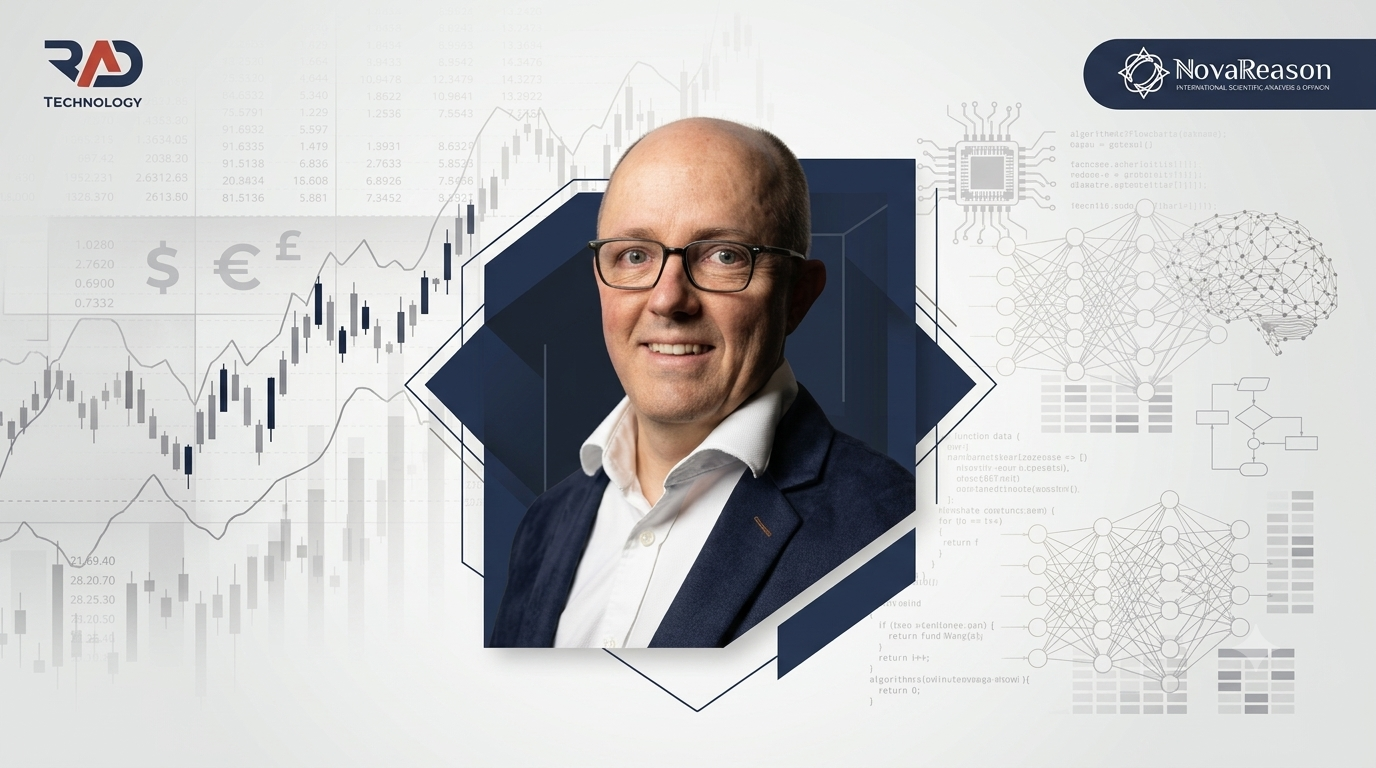

In a striking comment, Sean Peche, Founder and Portfolio Manager at Ranmore Fund Management, has warned against one of the oldest and most persistent mistakes in financial markets: paying excessive prices for compelling investment stories before it becomes clear how those stories will ultimately unfold.
Peche's comments come amid a massive wave of investment in AI infrastructure, as technology companies make enormous moves to secure the energy, computing power and data-centre capacity needed to compete for the future.
But his message is simple — and perhaps slightly uncomfortable:
The more exciting the story becomes, the more it does not necessarily mean that the investment itself is getting better.
Peche said:
“In all the bubbles we've experienced, everybody at the time said, 'This is the biggest thing ever to happen', but the truth is we just don't know. Artificial intelligence is a very, very fast-moving world. Every day there is something new coming out. We don't like paying up for great stories because you never know how the story unfolds. We prefer to find the good stories that people are worried about rather than the great stories everybody is excited about.”
Financial history is filled with stories that, at the time, appeared to be "the biggest thing ever to happen" — only for investors to discover that the future has an inconvenient habit of refusing to follow the script they paid for in advance.
For Peche, the intelligent investor does not necessarily look for the story that everyone is excited about, but rather for the good story that everyone is worried about.
And in the AI race, where companies are competing to build the future before anyone has fully agreed on what that future will actually look like, that advice may matter more than ever.
Peche added:
“The future quite often turns out to be different from what you expect. So, the key is not to pay too much for those expectations. If the future is unforecastable, don't overpay for it.”
The idea may sound simple, but it strikes at the heart of one of the most sensitive principles in financial markets:
The story can be right… and the price can still be wrong.
AI may indeed succeed in reshaping the global economy, and the companies leading this wave may ultimately become the giants of the future. But that does not necessarily mean that every investor who buys their shares today at a price the market considers reasonable will emerge a winner tomorrow.
Investing does not always reward those who identify the right story.
Sometimes, it rewards those who know when to pay… and how much to pay.
That is why Peche's warning does not appear to be a rejection of artificial intelligence itself. Rather, it is a warning about something far older than the technology: the kind of enthusiasm that encourages investors to pay for the future before they know what it will look like.
And as companies race to build data centres, secure energy supplies, expand computing capacity and pour billions into AI infrastructure, the question may no longer be simply:
Will artificial intelligence change the world?
But rather:
How much have we already paid for that change before it has happened?
In the end, artificial intelligence may well be the greatest technological revolution of our time.
It may be.
But in the markets, one old rule continues to work with remarkable efficiency:
Don't pay for the ending… while you're still on the first page.