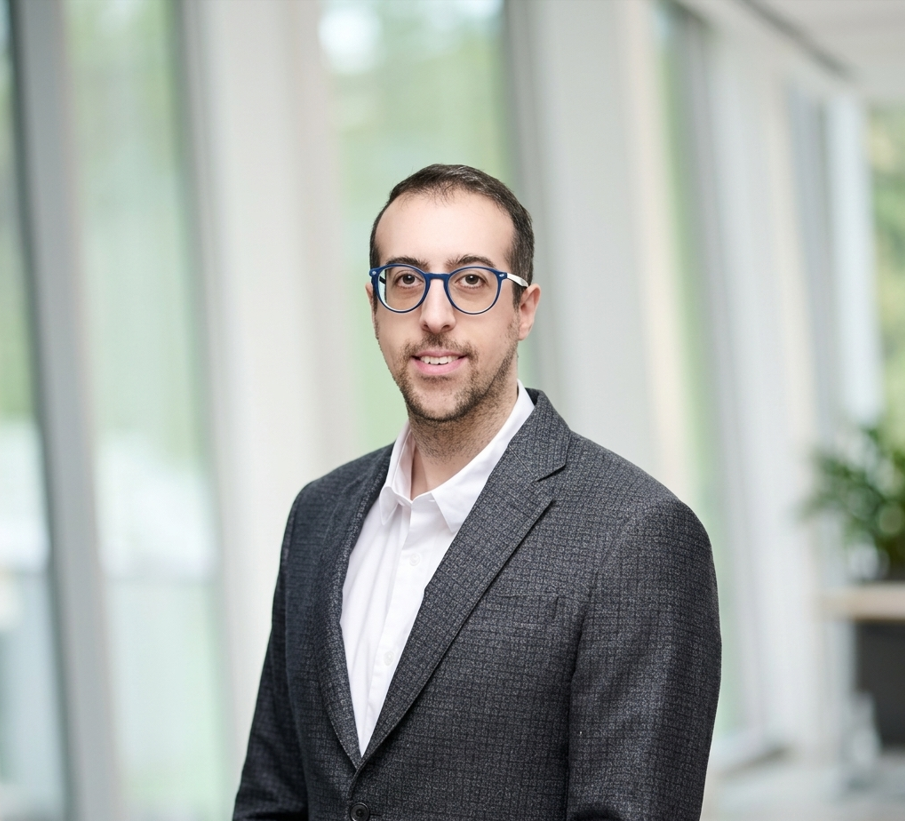

In an interdisciplinary lab at NYU Abu Dhabi, where quantum processors hum and neural-inspired algorithms test the boundaries of intelligence, Dr. Alberto Marchisio is charting a course for the future.
As research lead at the eBRAIN Lab, Marchisio is not just a researcher—he is a visionary navigating the turbulent intersection of quantum computing, advanced AI, and brain-inspired systems.
With more than sixty high-impact publications and international awards to his name, his work aims to integrate algorithmic innovation with advanced hardware, pushing the limits of computational performance in ways that could reshape industries and scientific discovery alike.
““True progress in emerging fields is not measured by ambition alone, but by the ability to navigate constraints with precision and rigor.””
This perspective sets the tone for a conversation that spans the promise of quantum AI, the hidden realities behind research breakthroughs, and the emerging role of the Middle East as a global technology hub.
Reading the Signals: What Makes Research Endure
In a world brimming with ambitious ideas, many projects shine brightly at first, only to fade quickly. For Marchisio, distinguishing fleeting novelty from lasting value depends on three early signals:
- Addressing real bottlenecks: Does the project solve a fundamental problem, rather than merely improving idealized metrics? In quantum machine learning, this means looking beyond accuracy percentages and asking: Can the method withstand realistic hardware constraints such as noise, limited qubit counts, and execution overhead?
- Cross-layer relevance: Research is more likely to endure if it impacts algorithms, systems, and hardware simultaneously, rather than excelling in isolation.
- Adaptability: A research direction is promising if it remains meaningful as hardware generations evolve, rather than relying on a fragile, single platform.
“Brilliant ideas on paper may become much less convincing when confronted with real hardware constraints”
He recalls early work in hardware-aware quantum neural architecture search, where model quality cannot be judged from an abstract circuit alone. Its performance depends on mapping to hardware, behavior after transpilation, and robustness under noise. Error mitigation is equally critical: near-term utility will depend on how effectively researchers can extract reliable computation from imperfect devices.
The Hidden Realities of Research
Many challenges in cutting-edge computing remain invisible to outsiders. In hardware-software co-design for quantum machine learning, difficulties often arise from the interactions between training dynamics, hardware limitations, and evaluation methodology.
“A model may look elegant in simulation, but small changes in circuit design can strongly affect both performance and feasibility”
Marchisio’s approach is rooted in realism from day one. Through hardware-aware optimization, robustness analysis, and scalability-focused techniques such as circuit cutting, he ensures that proof-of-concept models retain practical relevance.
He points to fully quantum neural networks as conceptually appealing but impractical in the near term due to noise, trainability, and scalability constraints.
Hybrid quantum-classical models, he argues, represent the most feasible path forward: using quantum resources selectively while relying on classical systems for stability and efficient data handling.
Beyond the Hype: Quantum AI and Industrial Reality
Billions of dollars are being invested in quantum AI, fueled by expectations of rapid industrial and economic returns. Marchisio tempers optimism with discipline:
“Quantum does not automatically improve machine learning; complex data, unstable training, and underestimated classical baselines are often the real limiting factors”
The industrial value of quantum AI will emerge only when the full pipeline—hardware, algorithms, software stacks, and benchmarking—becomes competitive under realistic constraints, including cost, reliability, latency, and maintainability.
He estimates that narrow, optimization-focused workflows could show measurable economic impact within a few years, while broader applications of quantum machine learning may take five to ten years, depending on hardware evolution and improvements in error mitigation and benchmarking.
Edge AI Meets Quantum Computing: Orchestrating Complexity
The integration of Edge AI and quantum computing is an exciting frontier but fraught with complexity.
Marchisio envisions carefully partitioned architectures rather than fully fused systems, especially in robotics and autonomous systems.
“Pushing quantum computation directly to the edge is not realistic yet; it should only be applied where it adds true value”
In these hybrid systems, edge devices manage sensing, low-latency filtering, and immediate decisions, while remote quantum backends tackle specific optimization subproblems, such as route planning or task allocation.
The principle is clear: quantum resources must solve well-defined bottlenecks and be benchmarked against strong classical alternatives, avoiding unnecessary complexity without real benefit.
Neuromorphic and Quantum Computing: Rethinking Computation
While neuromorphic and quantum computing originate from very different physical and engineering principles, both challenge conventional von Neumann assumptions, forcing researchers to rethink how learning, memory, communication, and efficiency are organized in future systems.
“Instead of incremental improvement, this intersection could eventually contribute to a new computing model”
To make this convergence practical, Marchisio emphasizes stronger benchmarks with application-level significance and improved underlying technologies for reliable hybrid experimentation.
He expects meaningful convergence to be a decade or more away, likely beginning in narrow research settings before any broad industrial adoption.
The Middle East as a Global Technology Hub
The Middle East, particularly the UAE, is rapidly emerging as a hub for advanced computing and AI research.
Marchisio highlights that the region’s strength lies not only in funding, but in the ability to translate investment into sustained research programs, infrastructure, and international collaborations.
“One of the most important factors is not funding alone, but how it is converted into programs and networks that endure over time”
Speed of execution, international partnerships, and talent cultivation provide strategic advantages. With sustained effort, research centers in the Middle East could compete globally within the next decade, particularly in focused, interdisciplinary areas where sustained investment and clear scientific direction exist.
Common Misconceptions and the Principle of Impact
A recurring mistake among young researchers—and sometimes institutions—is confusing proof-of-concept with real-world utility.
Emerging fields like QML, Edge AI, and neuromorphic computing make it easy to build demonstrations that look impressive but fail under realistic conditions.
“Distinguishing between proof of concept and practical impact is often overlooked”
Projects with lasting influence are those that connect scientific ambition with practical feasibility, benchmark rigorously against classical baselines, anticipate system limitations, and carefully evaluate scalability, efficiency, and robustness.
Between Vision and Reality
Between ambition and execution, between theory and systems, lies the space where real progress in Quantum AI is made. Dr. Marchisio underscores that the future will be defined less by promises or hype and more by the ability to navigate constraints with precision and scientific rigor.
“True progress is measured not by innovation alone, but by the extent to which it adheres to scientific and practical standards from the outset”
For researchers, investors, policymakers, and technology enthusiasts worldwide, Marchisio’s insights offer a grounded perspective in a field often clouded by hype.
His message is clear: vision must be married to discipline, creativity to rigor, and ambition to realism if Quantum AI is to truly transform the world.


